When Schools Close During Conflict: How Technology Can Keep Learning Going
When conflict forces schools to close, learning doesn't have to stop. Discover how teachers can use accessible digital tools to support students and maintain education during emergencies.
On this page
- Why Education During Conflict Matters
- Can Social Media Really Help Students Learn During Emergencies?
- Three Things Schools Need to Keep Education Going
- 1. Secure access to school information
- 2. Accessible teaching and learning materials
- 3. Communication between teachers, students, and parents
- A Practical Three-Stage Plan for Schools
- Stage 1: Prepare before schools close
- Stage 2: Keep learning manageable during the emergency
- Stage 3: Assess and recover after schools reopen
- What About Students Who Have No Reliable Internet?
- The Role of Parents in Emergency Remote Learning
- How Teachers Can Prepare Lessons for Low-Resource Settings
- A resource for teachers: EasyLessonPlan
- Frequently Asked Questions
- What is educational sustainability during conflict?
- Can WhatsApp be used for teaching during emergencies?
- Is emergency remote learning the same as normal online education?
- How can schools prepare for unexpected closures?
- Final Thoughts: Learning Continuity Starts Before the Crisis
- Research reference
When Schools Close During Conflict: How Technology Can Keep Learning Going
Imagine being a teacher who prepared lessons for the week, only to wake up to news that your school must close because the roads are unsafe.
Your students are scattered across different neighborhoods. Some have access to the internet. Others depend on a parent's phone. Nobody knows when classrooms will reopen.
What happens to learning?
For millions of children living in conflict-affected communities, school closures are more than an inconvenience. They disrupt routines, separate students from trusted adults, and interrupt learning at a time when children need stability and support.
But what if the same technology families use to communicate every day could also help teachers keep their students connected to education?
That is the question explored in a 2021 research paper by Hoda Baytiyeh, titled Social Media Tools for Educational Sustainability in Conflict-Affected Regions, published in Education Sciences.
The paper presents a useful idea: schools do not always need expensive technology to establish a temporary learning environment. With advance preparation, familiar digital tools can help teachers share lessons, communicate with families, and maintain a sense of school community during emergencies.
The challenge is knowing how to use those tools effectively.
Why Education During Conflict Matters
When conflict forces a school to close, the consequences extend far beyond missed lessons.
Students may lose access to educational resources, their teachers, and daily routines that provide structure and reassurance. Some families are displaced. Others are afraid to let their children travel to school.
Teachers may also be unable to reach their classrooms safely.
Baytiyeh (2021) discusses how conflict disrupts educational delivery and threatens students' academic, psychological, and social development.
The paper makes an important point: educational continuity should be part of a school's emergency preparedness plan rather than something administrators improvise after a crisis begins.
This does not mean that maintaining a normal school schedule should become more important than children's safety.
It means having a realistic backup plan that allows learning and relationships to continue when circumstances permit.
Can Social Media Really Help Students Learn During Emergencies?
Most people associate social media with entertainment, communication, and sharing photographs.
But many of the same tools can support educational activities.
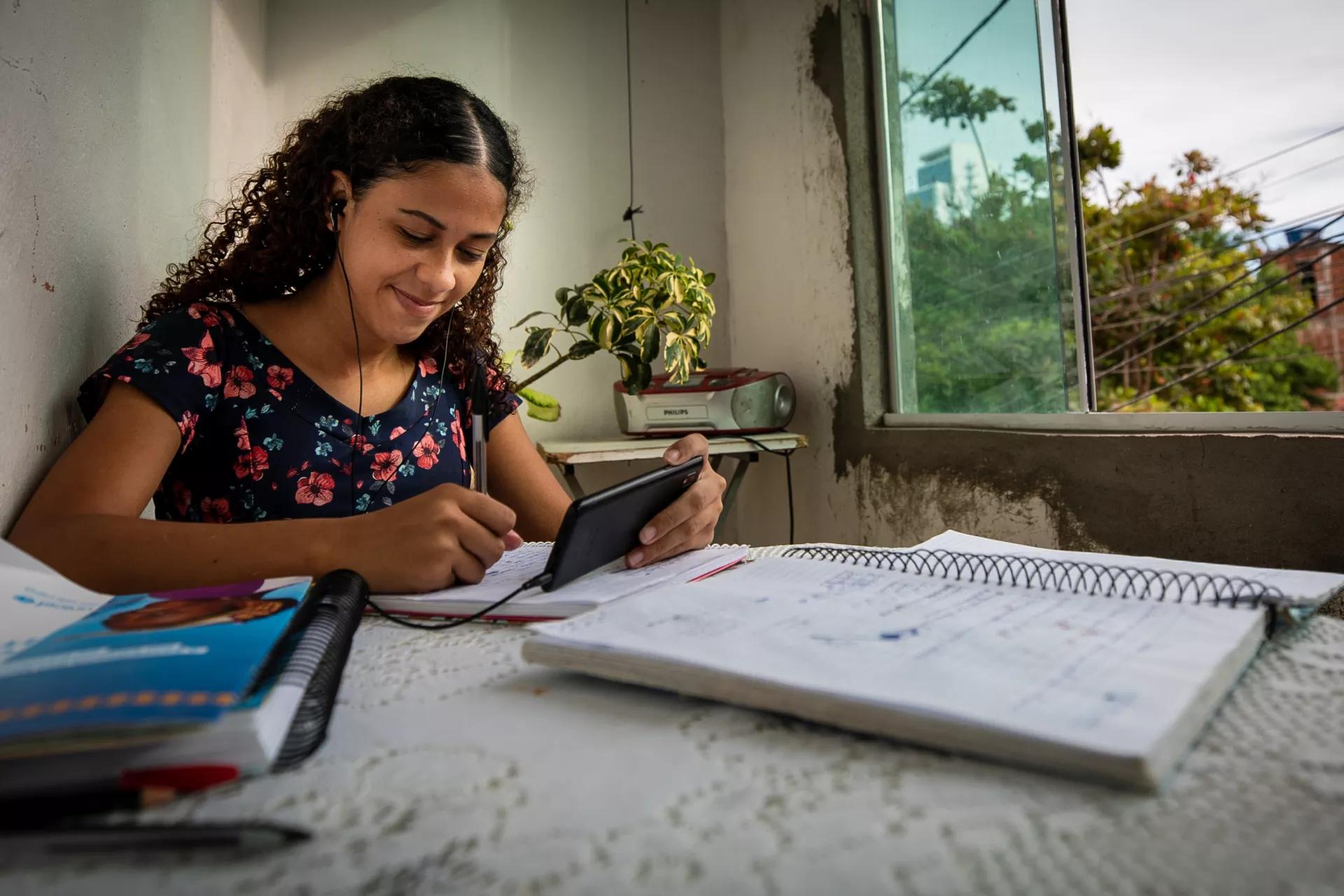
Teachers can distribute reading materials, share recorded explanations, answer students' questions, organize discussions, and communicate with parents.
A simple messaging platform, for example, may help a teacher reach students who cannot access a more sophisticated learning management system.
The value comes from familiarity.
During an emergency, introducing an entirely unfamiliar learning platform can create additional stress. A tool that teachers and families already understand may be easier to adopt.
Baytiyeh's research draws on Rogers' Diffusion of Innovations theory to explain why people are more likely to adopt technologies they perceive as useful, compatible with their needs, understandable, and practical to test.
However, being comfortable with social media does not automatically mean students know how to use it responsibly for academic work.
Teachers still need to provide clear instructions, establish appropriate boundaries, and help students develop digital literacy skills.
The goal is not to turn every social media platform into a classroom. It is to use appropriate, accessible technology to support learning when normal classrooms are unavailable.
Three Things Schools Need to Keep Education Going
One of the most useful parts of Baytiyeh's research is a framework for educational continuity during emergencies.
The framework, illustrated in Figure 1 of the original paper, connects three essential components.
1. Secure access to school information
Schools depend on information.
Student records, class lists, curriculum documents, timetables, and administrative files are essential for running an educational institution.
When that information exists only on computers inside a school building, an emergency can make it inaccessible.
Baytiyeh recommends cloud computing as a way to maintain access to administrative resources during temporary school closures.
A school might, for example, use an appropriately secured cloud system to keep essential records available to authorized staff.
This requires planning around permissions, privacy, backups, and internet connectivity.
Cloud storage is not a complete solution by itself, but it can reduce dependence on a physical school building.
2. Accessible teaching and learning materials
Students need somewhere to find their lessons.
The research discusses platforms such as Google Drive, Google Classroom, MoodleCloud, wikis, and other online tools for distributing educational resources.
Some platforms and pricing arrangements described in the 2021 paper have changed, so schools should verify current availability before selecting a tool.
The underlying teaching principle remains relevant.
A teacher should be able to organize resources in a way that students can understand and access.
Imagine a Biology teacher preparing a lesson on photosynthesis.
Instead of relying entirely on a live video class, the teacher could share a short reading passage, a compressed explanatory video, and a worksheet students can complete at home.
Students could submit their responses when internet access becomes available.
This approach gives learners flexibility, particularly when families are sharing devices or dealing with unreliable connectivity.
3. Communication between teachers, students, and parents
Learning is not simply about receiving information.
Students need opportunities to ask questions, receive feedback, and feel connected to their learning community.
Baytiyeh highlights the potential of communication tools, including messaging applications, discussion platforms, and blogs, to preserve these relationships.
For example, a teacher might use a school-approved communication channel to share weekly instructions and answer questions.
Parents could receive updates about learning expectations, while students could participate in structured discussions.
Schools must use age-appropriate channels, protect children's privacy, and avoid exposing personal information in public groups.
The most important feature is not the name of the app.
It is whether the communication method is safe, reliable, accessible, and useful to the families who need it.
A Practical Three-Stage Plan for Schools
The research proposes actions before, during, and after an emergency.
Here is how school leaders can translate that framework into a practical approach.
Stage 1: Prepare before schools close
The best time to design an emergency learning plan is while a school is still operating normally.
Administrators should identify which communication tools families can access, establish secure contact systems, and decide where educational resources will be stored.
Teachers need training and opportunities to practice delivering lessons online.
Parents and students also need to understand what will happen if classroom teaching is interrupted.
Baytiyeh suggests testing the system through a three-day emergency learning drill.
That is a particularly useful recommendation because it exposes weaknesses before a real crisis.
A drill might reveal that some families cannot access the chosen platform, certain teachers need more technical support, or students do not understand how to submit assignments.
Those problems are far easier to address before an emergency.
Stage 2: Keep learning manageable during the emergency
When schools close, communication should come first.
Families need clear information about the school's plans, learning expectations, and available support.
Teachers can then distribute lessons through the channels established during the preparation stage.
However, emergency remote learning should not simply reproduce a full school day on a screen.
Students may be dealing with displacement, anxiety, limited electricity, or the responsibility of sharing devices with siblings.
Short, well-organized learning activities may be more realistic than several hours of continuous online instruction.
Teachers can prioritize essential learning objectives, provide flexible deadlines, and maintain regular but manageable communication.
Equally important, they should remain attentive to students' emotional well-being.
Baytiyeh emphasizes the importance of supportive relationships for children experiencing conflict and trauma.
Sometimes a brief, reassuring message from a trusted teacher can help a student feel connected to school.
Stage 3: Assess and recover after schools reopen
When students return to classrooms, teachers should not assume that everyone learned the same material equally well.
Some may have completed every assignment. Others may have struggled to access lessons or participate consistently.
The research recommends assessing student understanding after schools reopen to identify gaps and guide subsequent teaching.
This should be handled supportively, rather than treating missed work during a crisis as a failure of effort.
Teachers can use short diagnostic assessments, discussions, and formative activities to understand what students remember and where additional instruction is needed.
School leaders should also evaluate the emergency learning system itself.
What worked? Which students were difficult to reach? What needs to change before the next disruption?
These reflections can turn an emergency response into a stronger long-term preparedness plan.
What About Students Who Have No Reliable Internet?
This is one of the biggest challenges with technology-based education during emergencies.
A mobile phone does not guarantee reliable connectivity.
Some students may have limited data, inconsistent electricity, or no personal device at all.
Baytiyeh acknowledges internet availability and speed as limitations of the proposed framework.
Schools therefore need to avoid designing a learning system that works only for students with the best access to technology.
Possible adjustments include:
- Providing downloadable worksheets and small files instead of relying exclusively on live video.
- Offering audio explanations when large video files are impractical.
- Allowing flexible submission deadlines when connectivity is unreliable.
- Preparing printed materials where safe distribution is possible.
- Using SMS or ordinary phone calls for essential communication when internet services are unavailable.
These adaptations extend the paper's core principle: make learning as accessible as circumstances allow.
They also remind us that educational sustainability is not about using the newest digital platform.
It is about keeping education within reach.
The Role of Parents in Emergency Remote Learning
Parents are a central part of Baytiyeh's proposed framework.
When children are learning away from school, families often become the connection between teachers and students.
Parents may help children access materials, manage their time, and communicate difficulties to teachers.
But parental involvement should not mean expecting parents to become full-time teachers.
Families may be navigating extremely difficult circumstances themselves.
Schools can make participation easier by providing clear instructions, realistic expectations, and simple communication channels.
For younger children especially, predictable routines and reassuring support can make remote learning more manageable.
How Teachers Can Prepare Lessons for Low-Resource Settings
One of the practical difficulties teachers face during disruptions is preparing lessons that do not depend on well-equipped classrooms.
A science teacher may not have access to laboratory equipment.
A mathematics teacher may be unable to distribute printed textbooks.
A student may be learning from home with only ordinary household materials.
This requires teachers to rethink their lesson activities.
Instead of asking students to complete a laboratory experiment requiring specialized equipment, a teacher could design a safe observation activity using readily available materials.
Rather than assigning a long online lecture, a lesson could be broken into smaller activities with clear instructions.
Planning for these situations takes time, particularly when teachers are already managing the pressures of an emergency.
A resource for teachers: EasyLessonPlan
The EasyLessonPlan Low-Resource Planner is designed to help teachers develop lessons for classrooms and learning environments with limited resources.
Teachers can use it to plan activities suited to the materials available to their students.
It does not replace an emergency communication system or guarantee offline access. Instead, it can support one important part of educational continuity: preparing realistic learning activities when resources are scarce.
Explore the Low-Resource Planner.
Frequently Asked Questions
What is educational sustainability during conflict?
Educational sustainability during conflict refers to maintaining access to meaningful educational opportunities when violence, insecurity, displacement, or school closures disrupt normal teaching and learning.
Can WhatsApp be used for teaching during emergencies?
WhatsApp can support teacher-parent communication, sharing instructions, and distributing small learning resources. However, schools need clear rules for privacy, child safeguarding, participation, and appropriate communication.
Is emergency remote learning the same as normal online education?
Not exactly. Planned online education is usually designed around a stable delivery model. Emergency remote learning is a temporary response to disruption and must account for circumstances such as unreliable connectivity, psychological stress, and unequal access to devices.
How can schools prepare for unexpected closures?
Schools can maintain secure backups, establish communication procedures, prepare accessible digital resources, train teachers, and test their emergency learning plans before disruptions occur.
Final Thoughts: Learning Continuity Starts Before the Crisis
One of the strongest messages from Baytiyeh's research is that schools should not wait until an emergency happens to develop a learning continuity plan.
A familiar messaging platform, a secure cloud-based resource library, and a team of prepared teachers can make a difference when schools cannot operate normally.
But technology alone is never enough.
Effective emergency education also depends on thoughtful leadership, parental involvement, flexible teaching, digital safety, and attention to children's emotional well-being.
The research offers a proposed framework rather than evidence that one particular collection of tools will work in every conflict-affected setting. Schools must adapt it to their own security conditions, resources, and learners.
The aim is not to recreate a perfect classroom during a crisis.
It is to preserve meaningful opportunities to learn, maintain supportive relationships, and help students reconnect with education when it is safe to do so.
A school building may temporarily close. The connections that support learning do not always have to disappear with it.
Research reference
Baytiyeh, H. (2021). Social Media Tools for Educational Sustainability in Conflict-Affected Regions. Education Sciences, 11(11), 662.
Try the tool from this article:
Low-resource lesson plannerSolomon Tatwebwa
Founder, EasyLessonPlan
Teacher and founder of EasyLessonPlan, building practical planning tools for classrooms everywhere.
Ready to plan your next lesson?
Create an editable lesson plan with clear objectives, a timed teaching sequence, assessment, differentiation and practical activities.
Start planning free